

Taimahi Trust - Building Belonging, Growing Skills, and Changing Attitudes
Based in Whangārei, Taimahi Trust is on a mission to achieve lasting, systemic change. By walking alongside young people with learning and intellectual disabilities, helping to grow their agency and self-determination, and working to change attitudes about disability, Taimahi is focused on supporting them to thrive.
Taimahi has a dedicated training academy featuring interconnected micro-enterprises, which provide practical training environments for its trainees. This features a commercial kitchen where the young people produce goods such as pies, bread, and soups, an herbarium where they grow herbs and fresh produce, and a store where they merchandise these products and engage with customers from the community.

Trainee Rory cuts fresh herbs in the hothouse
The programme offers free on-the-job training and development, equipping young people with skills and boosting their confidence and independence. Taimahi envisions a future where there are meaningful, diverse, and genuine opportunities for young people with learning and intellectual disabilities to flourish within the community. The kaupapa is very much people-centred.
“People sit at the heart of our mission. The Taimahi Trainees, their parents or caregivers, and the local community in Whangārei. Those on the programme tell us they enjoy it because they are treated like adults. They tell us that they enjoy learning new skills and working as part of a team. Their parents and caregivers often repeat the same word to us: ‘belonging’. They tell us that they have seen their person take on more responsibility at home and in their personal lives,” says Jo Wyld, Engagement & Marketing Manager – Taimahi Trust.

Trainee Freedom kneads bread dough in the commercial kitchen
The growth-centric approach Taimahi has adopted centres the trainees, and is tailored to their individual needs and unique talents. While the development of practical work skills is an important part of the programme, personal development and soft skills training are a core focus, often overlooked when it comes to supporting young adults with learning and intellectual disabilities.
The positive outcomes don’t end with the rangatahi and their whānau: the mahi is having a beneficial impact on the wider community.
“Our retail shop facilitates interactions between disabled people and the community. Because of our kaupapa, we’re able to address food insecurity, and that’s having an impact on our local community. Through local partnerships, all our shop signage is bilingual, using Te Reo Māori and English kupu, and our store sells affordable, fresh fruit and veggies from a co-op of farmers.
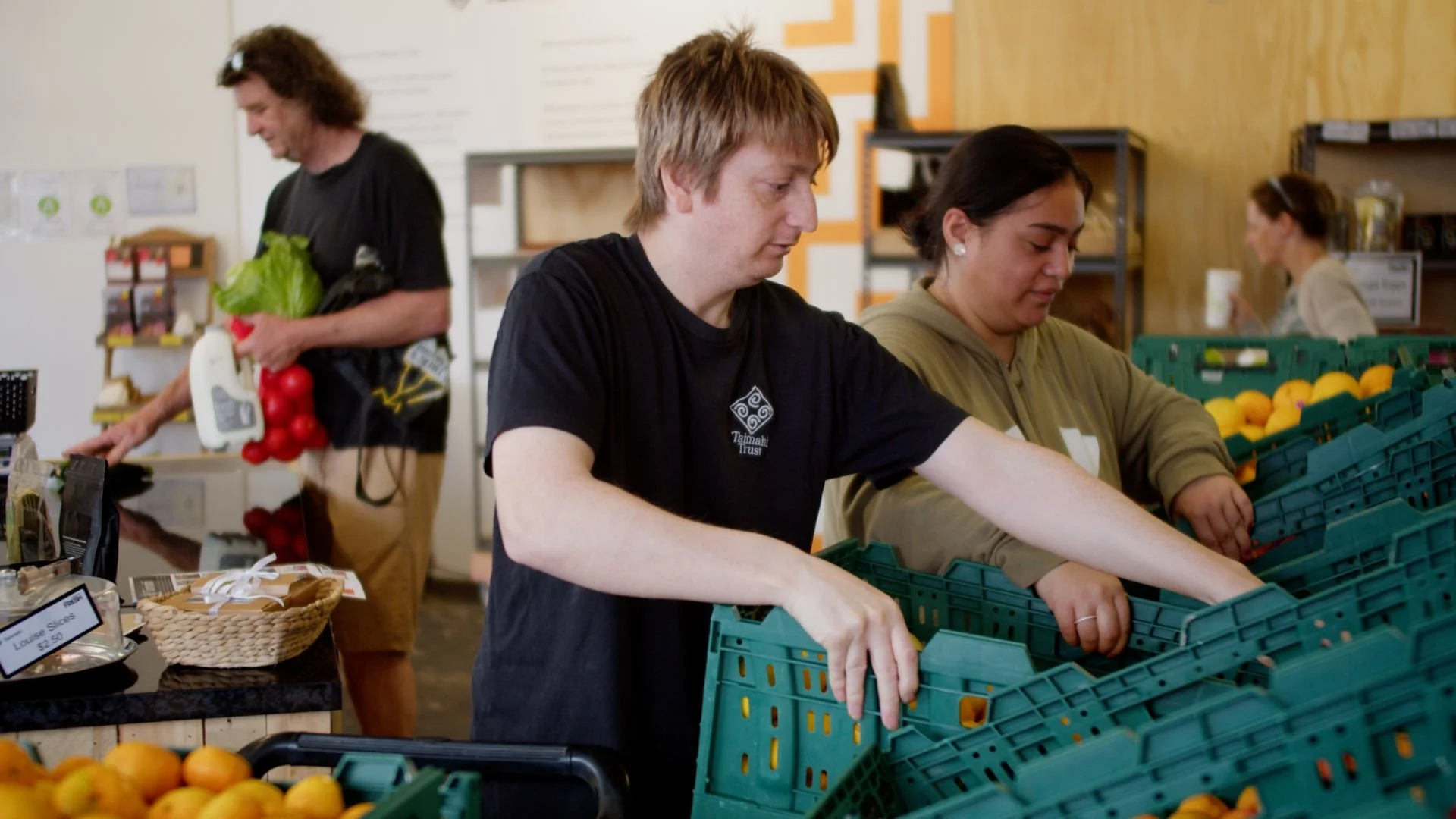
Trainee Dorian restocks the shelves in the Fresh+ store
“We’ve sold thousands of baked goods, and hundreds of herbs, preserves, beeswax wraps, and more – all handmade by Trainees under the guidance of a Supervisor and Job Coach. Customers interact with Trainees at the point of sale, meaning local people can interact with disabled people in an organic setting, and benefit from an often cheaper alternative to the supermarket duopoly.
“This approach helps strengthen integration, addresses social isolation, and encourages conversation. Not only through disability inclusion, but by being a place that provides a mana-enhancing experience of buying affordable kai, regardless of how much you earn,” says Jo.
Of course, the mahi is not without its challenges. Ensuring financial sustainability keeps pace with the ambition of Taimahi Trust is one; and navigating the inherent systemic bias and social stigma associated with intellectual and learning disabilities is another.
“In many ways, we speak an uncomfortable truth because we are upfront about the reality facing people with these types of disabilities. For years, it has been considered enough to give somebody inadequate treatment at work, social exclusion, pay below the minimum wage, lack of personal growth, and no professional development, just because they are disabled. We challenge that, and challenging that isn’t easy,” says Jo.

Trainee Nikolai makes coffee for a customer in the Fresh+ store
The current system of laws, policies, and practices, alongside the mindsets underpinning these frameworks, is failing young people with intellectual and learning disabilities, and Taimahi’s purpose is to address this. Recently, a strategic policy and advocacy role has been added to the team.
“At the heart of our mission is building agency and self-determination. That means leaving behind the outdated medical model and moving away from treating people with intellectual disabilities as passive recipients of support,” says Rachel Hill, Taimahi Trust’s CEO and Co-Founder.
Taimahi has developed a systems change strategy that is underpinned by four goals to help achieve their vision. These are: Shift mindsets; Reform the transition system; Integrate disability into regional employment frameworks; and Secure a housing ecosystem that fosters agency and self-determination.
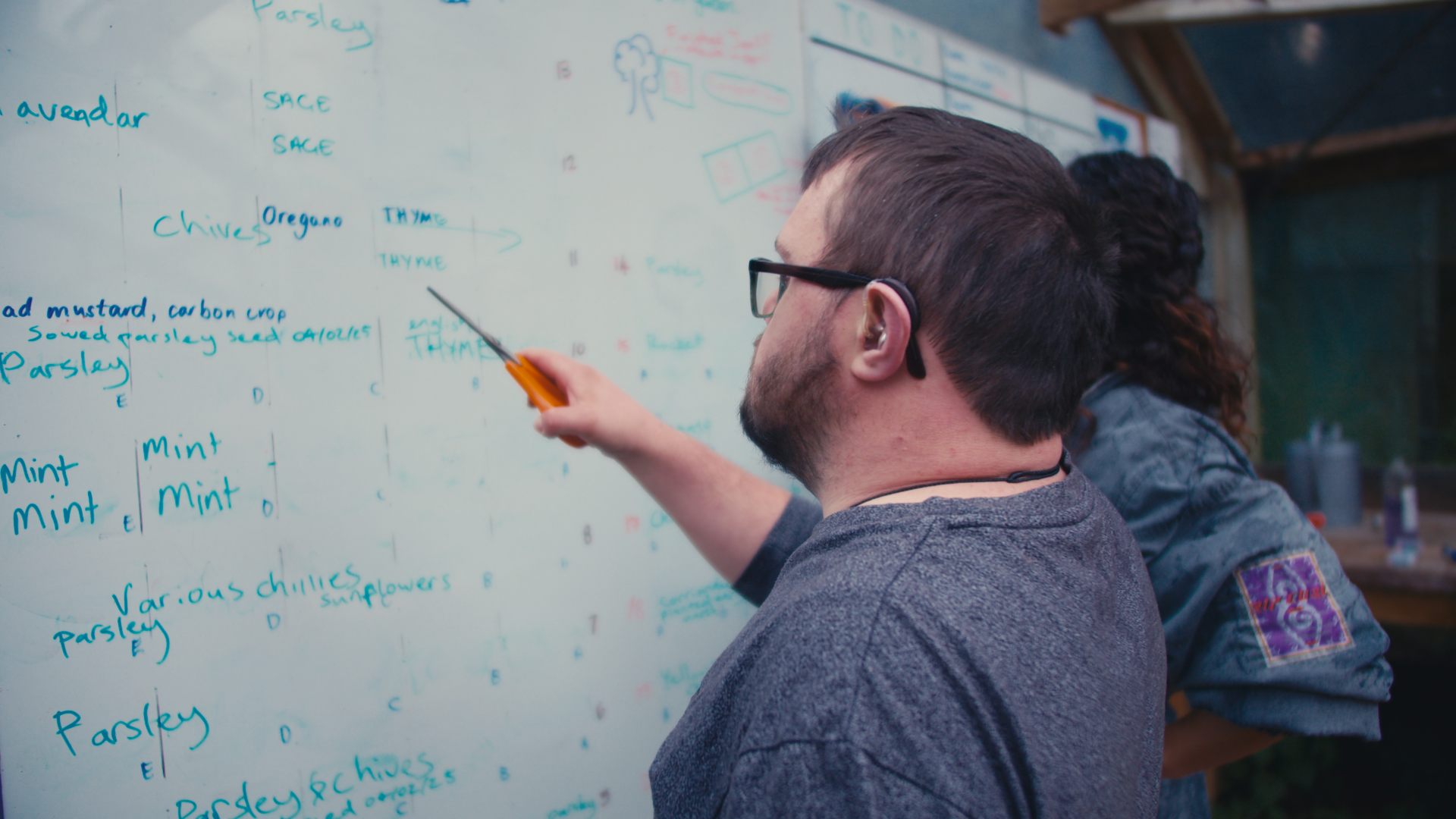
Trainee Rory checks the tasks for the afternoon in the hothouse
“To us, success is more than just building work-ready skills. The world isn’t always designed to accommodate people with intellectual and learning disabilities, and our model demonstrates how it can be. Our systems change mahi is just getting started, but we’re proud of the impact we have had so far. The work we have done so far is contributing to community wellbeing, wider sector advocacy, and supporting the viewpoint that disabled people deserve more than just to ‘exist’.
“The next big milestone for us is securing investment for a social enterprise that can employ Taimahi graduates in paid positions, while allowing for scaffolded support and maintaining the unique culture of belonging we have. This aspiration is built off the success of the enterprises we have already established – the commercial kitchen, hothouse, and Fresh+ retail store, with a view to long-term financial sustainability for our Trainees and our organisation,” says Rachel.
